
The Jesters Bar
Finding love, history, and cold tall boys in the crown jewel of Rodney Street

There’s been a decent influx of new people around here since I posted what has thus far been my most read bit of writing here. To all you new folks, welcome to Tender Lens! I’ve written over sixty posts about all kinds of things, like backpacking in the Absaroka-Beartooth Wilderness, why craft breweries need to unionize, and frogs in art history. This is ultimately a space where I will, even if I do not mean to, touch on history, labor, theft, power, and community, but also beautiful things, and often my home state of Montana.
Without further ado, here’s another continuation of my on-going series of photographs and writings about my favorite watering holes. I’ve already written about The Pony Bar and The Silver Dollar, as well as a general ode to dive bars. Come saddle up to this bar and join me for a spell, won’t you? Most of the photographs in this series are on 35mm film, which I believe adds to the general mythological vibe of these wonderful spaces.
Also, bear with me, because this might be a bit rambling - this piece is about a bar that has radically altered the path of my life. It’s hard to write well and lucidly about such a place, so cluttered with memory and big feelings.
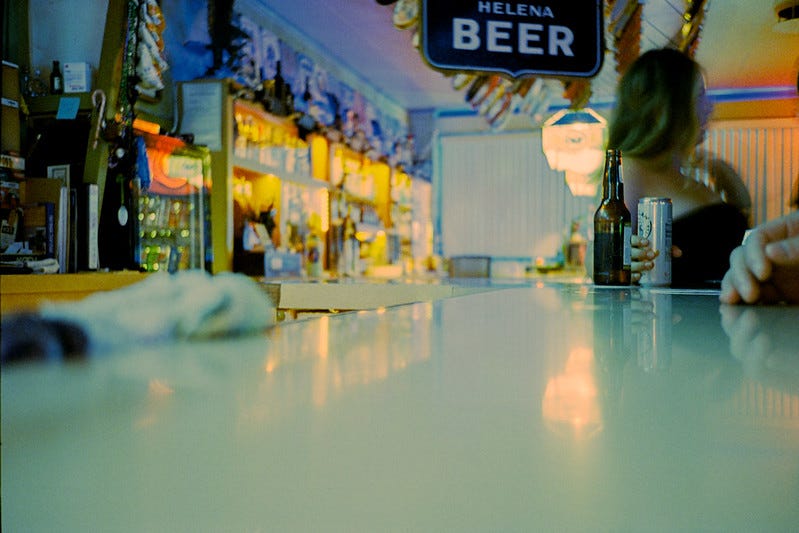
“I hope that you never go in there.”
My mom gestured as she drove down Rodney Street at the two story brick building on our left, sometime in my claustrophobic teen years. Chomping at the bit to get as far away from my hometown as possible, I figured I’d be so physically far away by the time I could legally go there it would be a moot point. Seedy dives held no interest for me - just a plane ticket away.
There is the Jesters Bar (and no, it is not the grammatically correct “Jester’s” though the bar is indeed owned by the Jester family). This sturdy establishment has been around since 1939, and she maintains a precarious balance of looking somewhat respectable in her Italianate architecture, adorned with a large mural on one of her sides, while always looking a little shaggy and usually having a few characters milling outside her front door, often before noon. (The stucco on the bottom half of the building certainly isn’t helping the allure.) The Jesters Bar isn’t exactly inviting to the general public - there are no windows to peer into that aren’t covered in blinds - and to know her you must embrace an open-ended adventure and simply walk in. Yet, this slightly ramshackle, previously elegant building, and the business within, both carry their age well. The part of Helena Jesters is in is undergoing a trendy face-lift, but previously was one of our meth-ier parts of town (among other criminal activities in the area).12
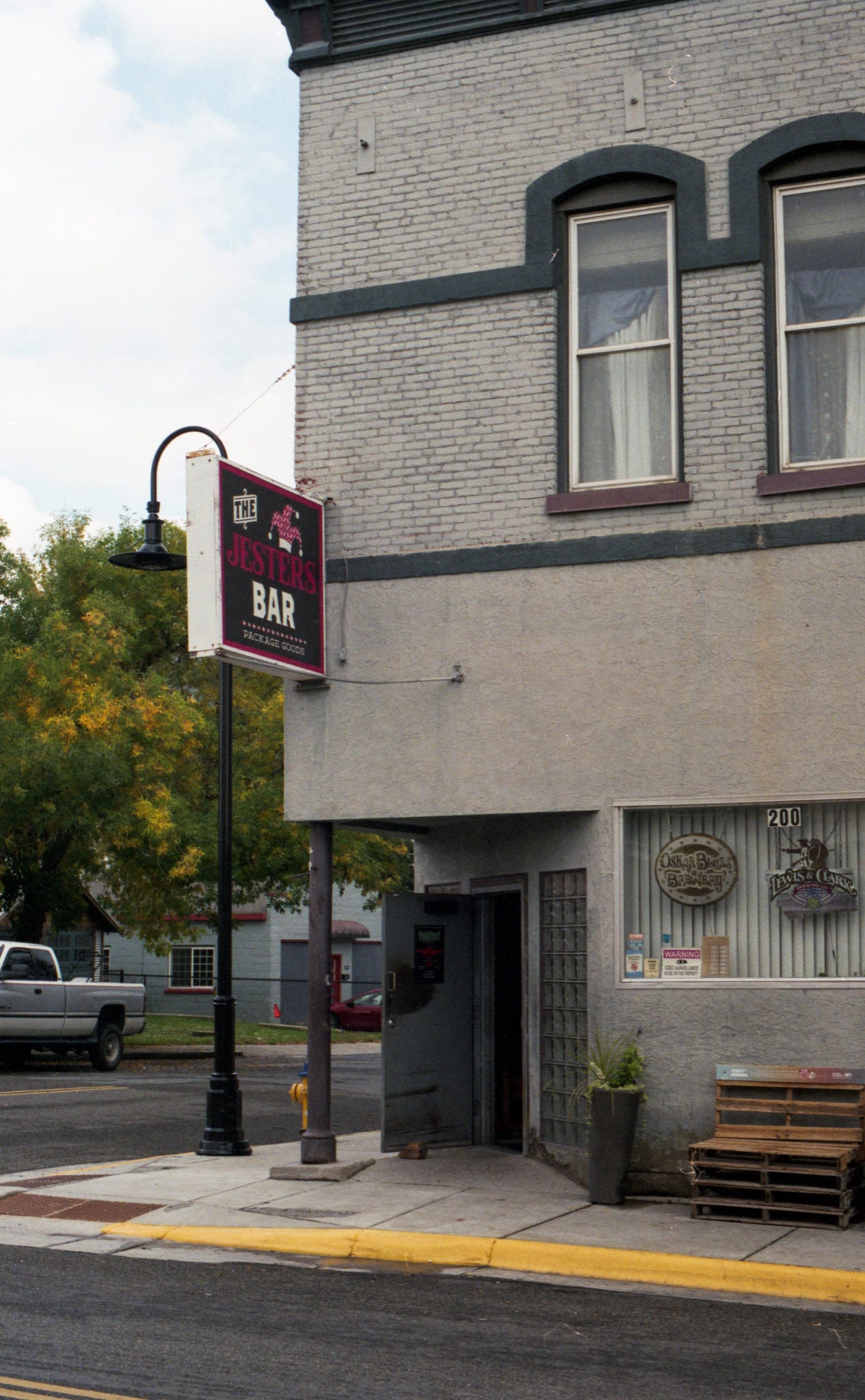
This particular building has almost always hosted a bar of some sort (minus duringProhibition), and the first was the Kenck & Co. Saloon, opened in the 1880s and run by F.J. Kenck, most likely of the prosperous early Kenck family. The bottom floor of the building shared space with a grocery store as well, while the top half was (and still is, I believe) apartments to accommodate Helena’s rapidly expanding population. Sadly, I can’t find photographs of what this building or the long-gone saloon looked like before some jerk applied stucco to the building’s bottom half.
Helena, Montana in the 1880s was a new town awash in money, dreams, violence, and hopeful souls from all over the world. It was frequently beset with floods, fires, and earthquakes, a rather Biblical-sounding place that started as a gold mining camp (and very populated by Confederates fleeing the South) and became a real, permanent town, escaping the fate of dozens of mining camps that faded into memory.3 By 1888 Helena hosted more millionaires per capita than any other city in the USA, and places sprung up by the dozen to find ways to help the rich spend their money.
The Jesters Bar is walking distance to what was once the busy red light district just a few blocks south. Before Prohibition, it would have been entirely possible to go to or from Kenck’s saloon before or after spending some time in such illicit places. Adventures aplenty back then, and although Helena is now a quiet town, I think that temptation and the possibility of thrills emanate around the bar to this day.
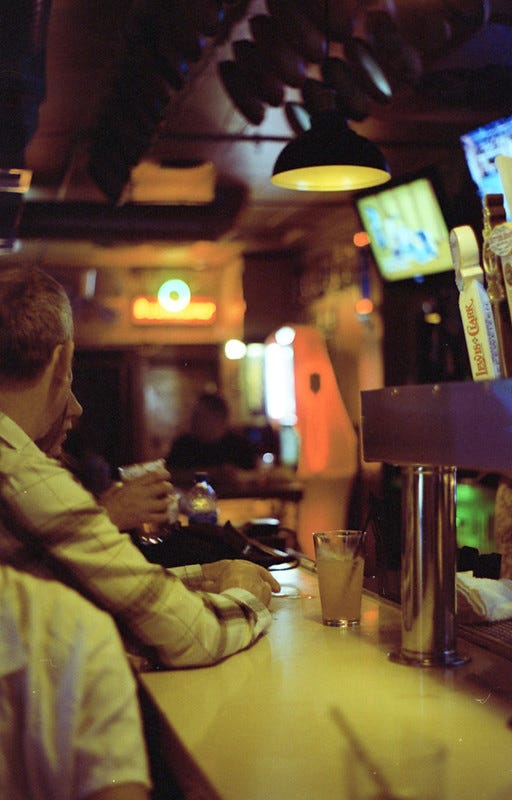
Frank Jester opened Jesters Bar where the saloon used to be in 1939, just after Prohibition was repealed, and the 1930s and 40s decor and sensibility still peeks out here and there. A sturdy marble bar top, elegant amongst the neon and TVs, nods in agreement with me. This is a place that has not been updated unless necessary. It is still in the family (I believe Liam Jester owns it) but researching the bar has been an exercise in finding peace with the loud echo in the archive of the Internet. Little about the Jester family, the bar, etc. has been written. Regardless, an 80 year old bar in a 140 year old building is something to experience.
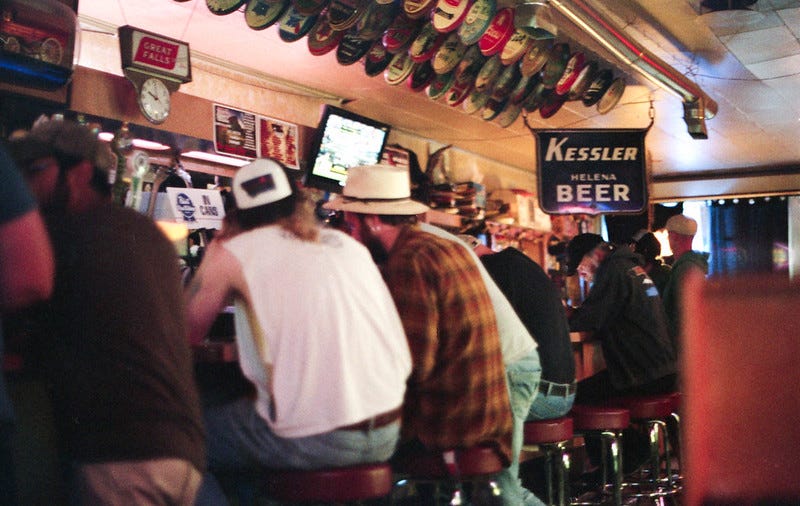
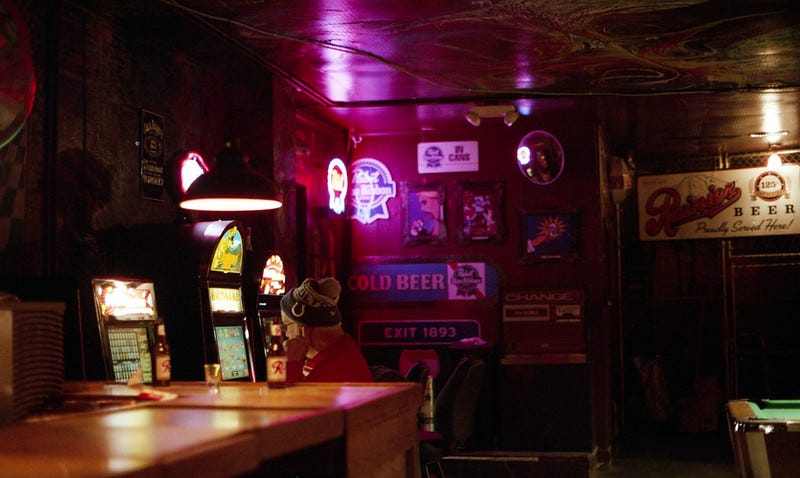
If you walk to Jesters, from almost every direction you will be walking in residential areas, far from bustling sounds. You’ll definitely walk past Victorian buildings, overly-decorous Second Empire homes, possibly a movie theatre named after famous actress (and Helenan) Myrna Loy, housed in a serious looking building that was once the jail. You might stroll past the beautiful granite Lewis & Clark County courthouse and the gloomy bail bonds place, whose tagline is “We Get You Out Before the Soap Drops”.
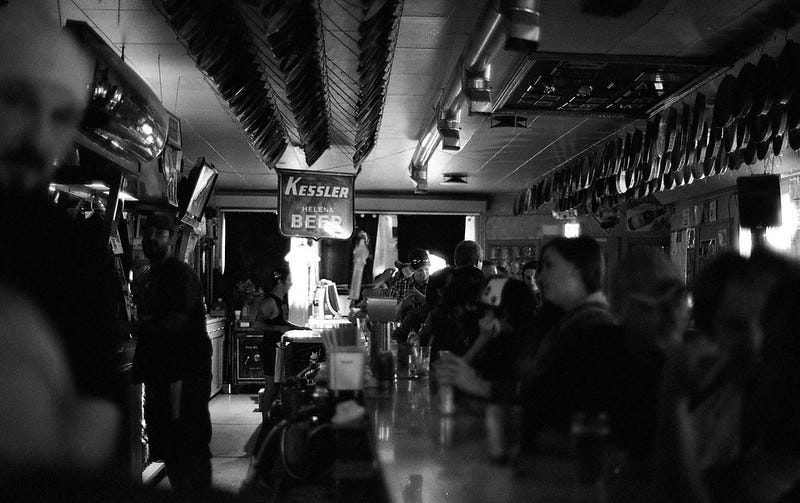
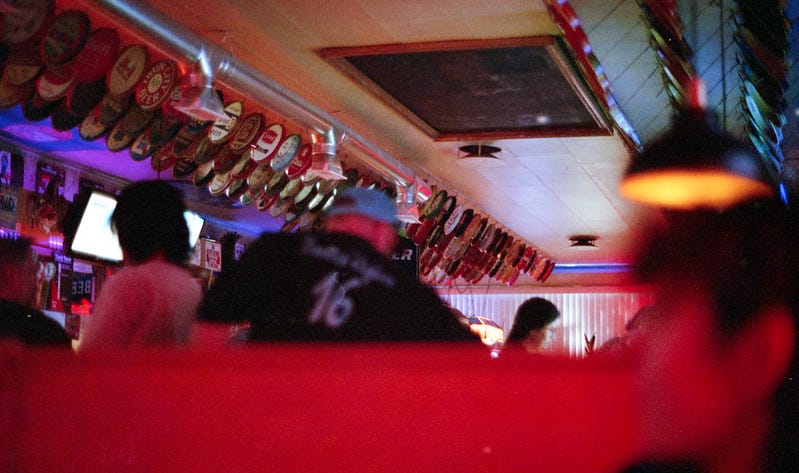
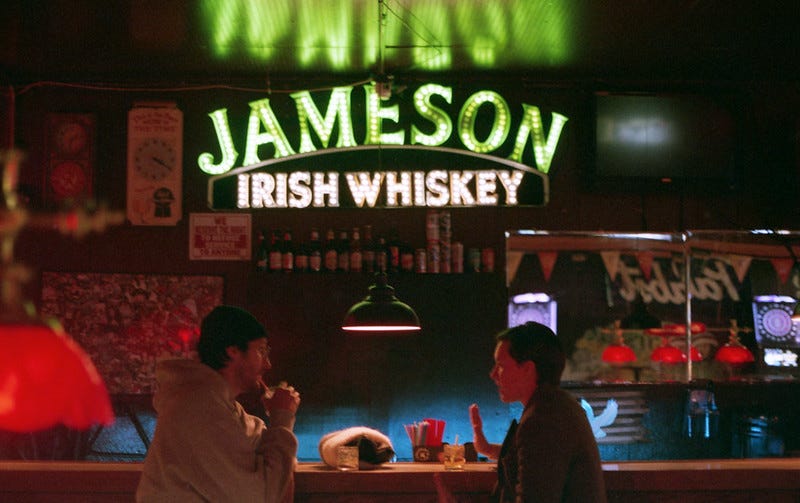
At night, this part of town is not well lit, nor busy, and so as you approach the bar you are usually asking the universe to make the effort worth it to come all the way here, blocks from downtown, up a somewhat steep hill, usually in the dark, away from the numerous bars and breweries. There are no promises at dive bars, but at this one even if nothing in particular happens you can spend an hour or two gazing at all the old brewery paraphernalia that hangs from the ceilings and lines the walls. Hundreds of old beer trays from long-dead Montana breweries hang proudly, gorgeous fonts and colorful ads shouting from every one. Neon signs a-plenty light up the place. The “art” painted in the back room where the stage and pool tables live is worth a few minutes of your time too, and even the ceiling back there is painted. There is no surface that is not covered in decor and kitsch, minus the actual surface of the bar.
Side note: Directly across the street from this marvelous bar is an apartment building that was once the home of Louis Riel, the politician and Métis leader who led active resistance movements against the Canadian government as the country kept encroaching on Indigenous people’s lands and way of life. He was hung for treason by Canada for standing up for his own people in 1885. (Always read those historical signs, y’all.) Sadly, we in Montana are not taught nearly enough about our long history of being home for our own Métis people but you can easily fix that by getting a copy of the fantastic Becoming Little Shell by Chris La Tray.
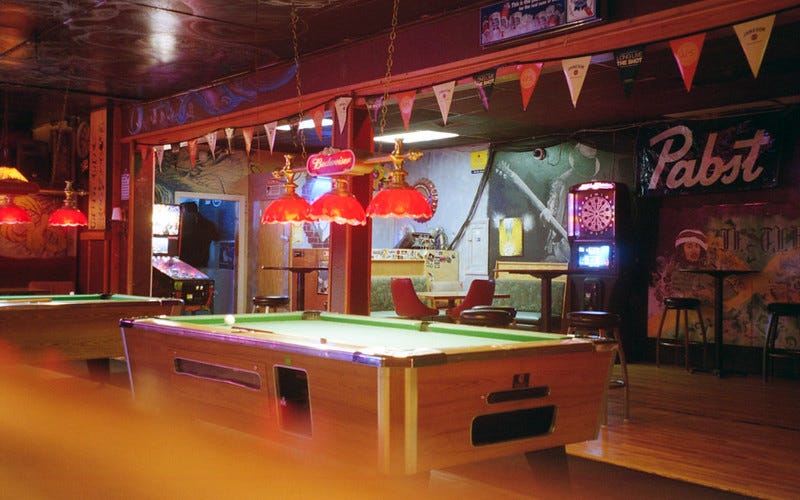
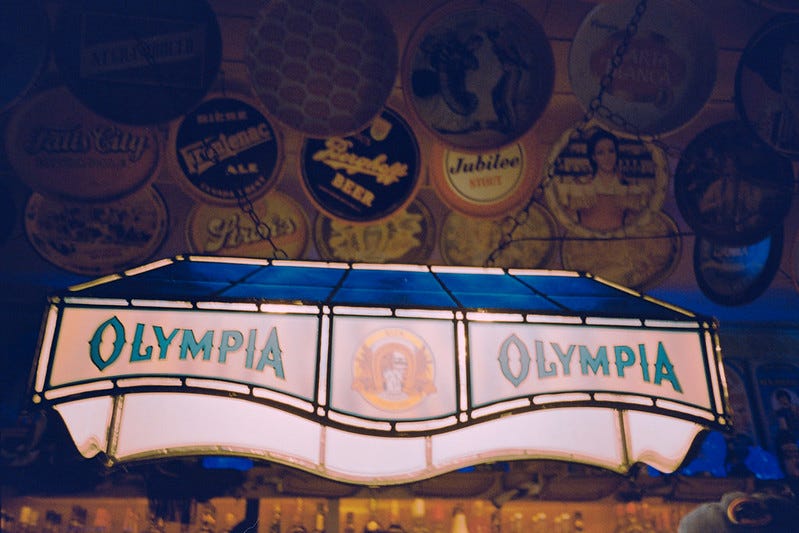
The first time I went into Jesters, I felt trepidation and excitement. At the time I was going to college in Bozeman, where the bars, even if somewhat dive-y, weren’t so awash in the sort of foul reputation I’d been led to believe this one had earned. I went with the man I was dating at the time, who fit right in with his worn clothes and weary air from a hard life.4 Something marvelous happened when I got up to use the washroom: the line of burly, leather-sporting motorcyclists ahead of me looked in my direction, and the man at the head of the line stepped aside and said, “Ladies first.”
Chivalry is not dead, friends. It’s thriving in corners of dive bars that look scary and that your mom told you not to visit.5
After that, Jesters made itself known to me time and again as the bar in Helena where I was least likely to have my ass grabbed (like at Millers Crossing) or be cornered by a man (like at the Rialto) or otherwise feel like a prey animal (the Gold Bar, etc). It was the only place where not only did this not occur regularly to women, but on the rare occasions it did, it was dealt with swiftly and unapologetically. That ruthlessness was curated by the bar manager, Chad, who looked a bit like Rasputin and made no bones about giving creeps the boot. (Chad is now gone doing something else with his life, but not forgotten. Rumors about his departure, a possible rift with the current owner, etc. still swirl around. I offer him nothing but thanks for curating such a safe space.) The way that I was able to relax, to be myself, to not feel wary at all times, was such a gift for a girl in her twenties.
It was at Jesters, too, that I met the person who would become the love of my life. I know we’re not supposed to look for love in the windowless depths of places such as this, but I’m not one to give serendipity a middle finger.
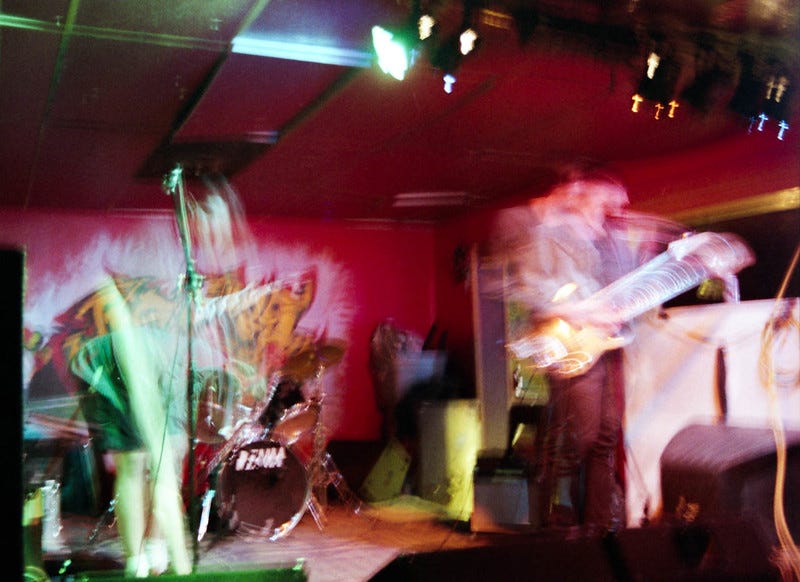
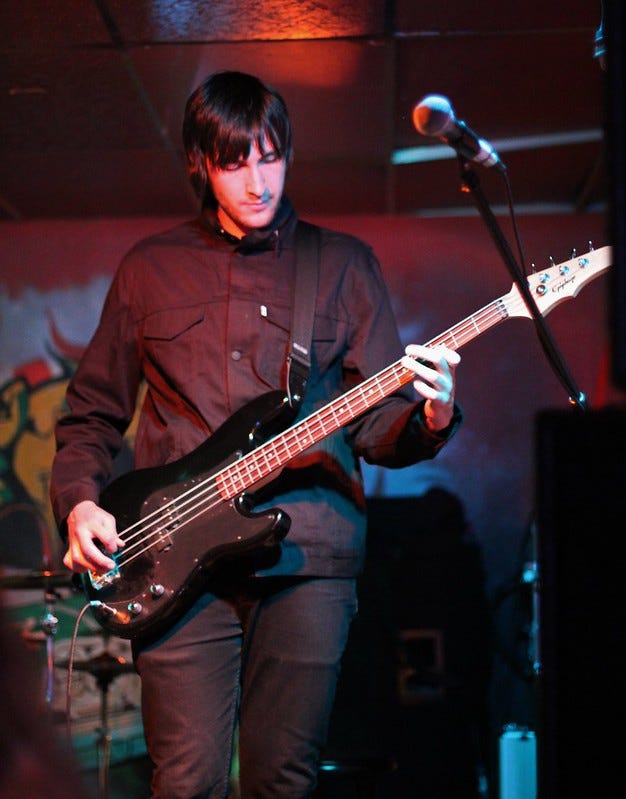
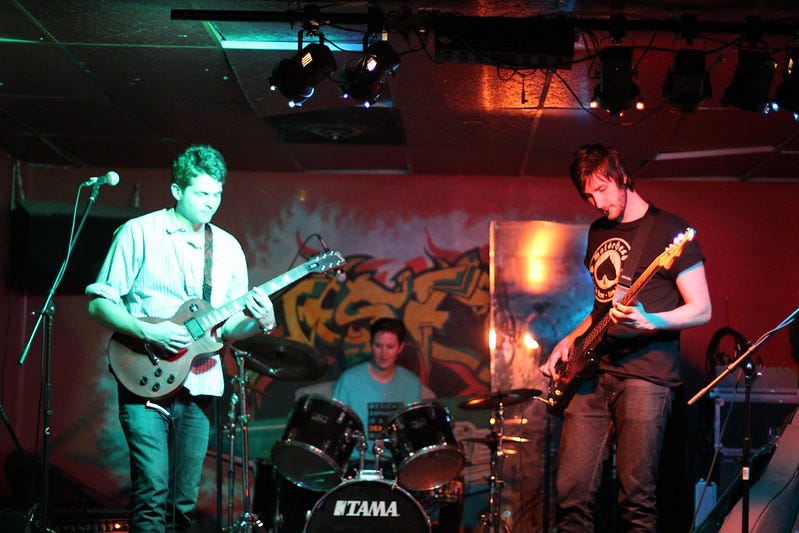
I came armed to photograph my friend’s band, Detta & the .45s, with my beautiful new DSLR camera. My friend was the drummer and I was eager to test out my new equipment, and what better place than a dark dive bar, where I could drink for cheap and watch my friend play in her band and see if the portrait lens I’d bought was half-decent? Little did I know that the bassist, who was suspiciously good looking and a tad bit grumpy, would eventually ask me on a date. Jesters will always be the place where I met somebody who has radically altered every aspect of my life, who I’ve been having adventures with for over nine years. If the Jesters Bar wasn’t one of the only places in Helena that would let college kids in garage bands play a set, where would I be?
Walking into Jesters to this day is feeling a breeze from a window I didn’t know was open. So many memories, without warning, pell mell, come blowing in. Celebrating with Mary when gay marriage was federally legalized in 2015. The slightly acrid taste of cheap gin. Sharing a goodbye beer with friends as we headed off to grad school, law school, and other adventures. The sound of a PBR being cracked open. Bringing my mom there to play pool. Watching Ella sing, her voice turning the dingy back of the bar into an oasis. Bringing my Canadian friend Emily there, because it was like a pilgrimage site after the pandemic made it so hard to come home. The joy of my partner reunited with his friends briefly at Christmas-time. The neon light catching ice in glasses, and glinting off beer cans. I think about the weird 2010s clothes I wore there, the one winter night I walked over a mile to the bar in the snow in ballet flats and tights because it was how the outfit worked (I didn’t get frostbite on a single toe, a real miracle), and the way one bar stool would get chosen to be layered in seven or eight coats as we all un-bundled. Small puddles of water would gather on the floor as the snow on jackets melted and dripped. Whooping and shouting at bands, clapping eagerly, dancing with Ella. Too many memories to write about, all somehow contained in this one place.
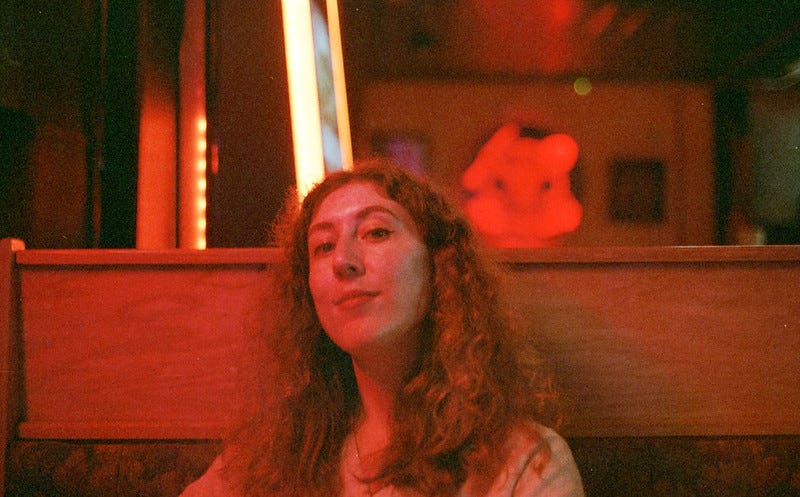
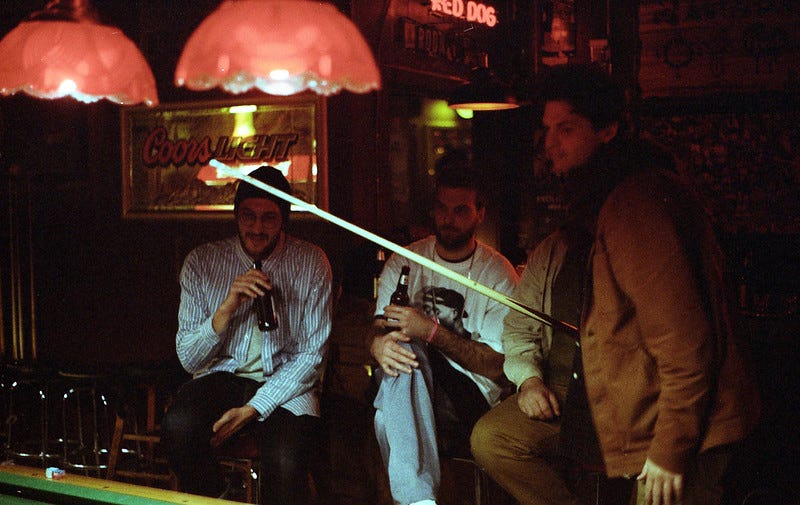
Jesters has been at the heart of the live music scene in Helena for a long time, and is highly accessible in that they rarely, if ever, charge folks to see bands play. I’ve seen Great Falls’ Hell City Kitty and Missoula’s Tiny Plastic Stars, bands you’ve never heard of (and also now defunct) that made my whole night, playing on that ramshackle little stage. Every Thursday is open mic night, too. I’ve seen people belt out ballads, skillfully play the slide guitar, and even try to rap. There’s vulnerability and glee here, in this sleepy and questionable part of town, in this old building that has seen its fair share of everything.
The good old J Bar will always be a port in the storm of life, even if I have to go there in my memories, because it has been the location of so much good, a space of kindness, surprising humanity, love, care, and feverish levels of joy. Every time I go home, I try to visit, and over the years it has changed. The bartenders are different, the music has shifted, Chad the bar manager with a sense of justice is long gone. Yet, I still love to go, because good dives accept us in all our shades of existence, and when I walk in I still get that feeling. I hope that you have a space that is similar, that is accepting and full of resilience, that has seen you through good and bad days, because goodness knows we need places like this now. Places to escape, to hope, to plan, to gather and commiserate and maybe even fall in love.
For potential visitors: Jesters is cash only, and there’s an ATM just inside the door. Tip your bartenders well. Try not to have nightmares about the creepy monstrous jester demon thing painted in the back room. Be open to a chat with strangers. Drink a Prickly Pear Pale Ale for me if you like delicious beer.
Be well, friends. Thanks for coming with me to another watering hole that absolutely has a sacred place in my heart. All photographs are mine, by me.
Growing up in the 90s and 2000s we wee kiddos were taught how to recognize meth labs, both mobile and in permanent buildings. We were taught the ingredients used, the way it messed with your face (tobacco = no bottom teeth, meth = no top teeth), and generally raised to understand that meth was pretty much everywhere. We were also shown the very scary “Not Even Once” campaign videos that assured us that if we tried meth even once we’d end up trafficked, stealing from our parents, etc. - it was a wild time.
Honestly just trying to sort out all the various violent things that have happened on Rodney Street in just the last twenty years is a doozy. That being said, as a women who has been walking around this part of town at all hours of the day and night for over ten years, I have yet to ever feel unsafe.
To this day I don’t think we know how to talk about the fact that many of the early white folks in Helena were Southerners who were probably at least somewhat okay with their part of the nation’s tradition of keeping other human beings as property. Until fairly recently, Helena boasted the most northern Confederate monument in the USA, put there by the Daughters of the Confederacy in a shitty Lost Cause move.
It is a right of passage for girls to date a man who we think we can fix. This was mine.
A proper dive can have rough edges but doesn’t put up with bullshit and encourages regulars and visitors alike to collectively maintain the peace.